Applications of graphene range from automotive components and protective coatings to flexible heating materials. Researchers are also exploring its use in batteries, sensors and medical technology.
But not every graphene application is ready for everyday use. Some are already commercial products, while others are still being developed.
Here is a closer look at where graphene is being used and what it can actually do.
What Makes Graphene Useful?
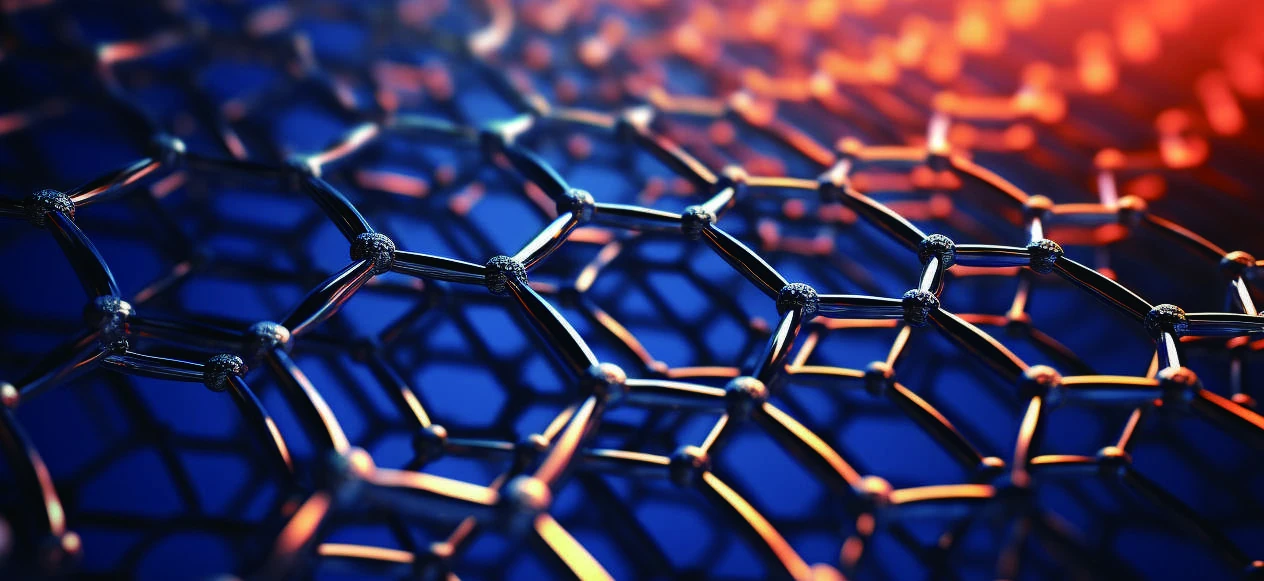
Graphene is a single layer of carbon atoms arranged in a honeycomb pattern. It is extremely thin, conducts electricity and heat well, and has excellent mechanical strength under certain conditions.
These properties make it useful for improving other materials and developing new technologies.
However, the performance of a finished product depends on much more than graphene itself. Material quality, manufacturing methods and product design all matter.
1. Automotive and Composite Materials
Graphene can be added to plastics, rubber and coatings to improve specific material properties.
For example, graphene-enhanced composites are being developed for lightweight automotive components. Graphene-containing coatings are also being studied for improved corrosion protection and durability.

Similar materials are being explored for aircraft components and protective equipment.
Researchers at the University of Manchester have studied how graphene-related materials reinforce polymers and what affects their mechanical performance. Their findings are discussed in a scientific review of graphene-reinforced polymer composites.
The results depend on the base material, graphene content and manufacturing process. Adding graphene does not automatically make a material stronger.
2. Electronics and Sensors
Graphene responds to changes in its surrounding environment, making it useful for certain types of sensors.
Graphene-based sensors are being developed to detect gases, pressure, physical movement and chemical substances.
These technologies could support environmental monitoring, wearable electronics and more compact electronic devices.
Researchers from Boston University and other academic institutions have explained how these sensors work in a peer-reviewed study of graphene-based environmental sensors.
Although research has shown promising results, manufacturing consistency, reliability and cost remain important considerations.
3. Batteries and Energy Storage
Graphene-related materials are being studied for lithium-ion batteries and supercapacitors.
In some battery designs, graphene can improve electrical connections within electrode materials. Researchers are also investigating its use in devices that need to charge and discharge quickly.
However, adding graphene does not automatically make a battery charge faster or last longer. Performance depends on the complete battery design.
A scientific review of graphene-based energy storage materials examines how graphene-containing composites are being developed for batteries and supercapacitors.
4. Water Filtration
Graphene oxide can be used to create thin membranes designed to separate certain substances from water.
Researchers are investigating these membranes for water purification and desalination, including the removal of dissolved salts.
At the University of Manchester, researchers developed graphene oxide membranes with controlled openings to study how salts could be filtered from water.
The university explains this work in its graphene membrane desalination research.
Large-scale production, membrane durability and cost remain important challenges before these technologies can be widely adopted.
5. Medical and Biomedical Research
Graphene-related materials are being explored for biosensors, drug delivery systems and medical monitoring equipment.
For example, researchers are developing sensors that can detect certain biological signals or substances.
Graphene materials are also being investigated for use in implants and other medical technologies.
A scientific review of graphene-based biomaterials discusses their potential medical applications, as well as questions about biocompatibility and toxicity.
Most advanced biomedical applications still require further safety testing and clinical evaluation. Promising laboratory results do not mean a treatment is ready for routine medical use.
6. Flexible Heating and Thermal Management
One practical application of graphene-containing materials is flexible electric heating.
A conductive heating layer produces heat when electricity passes through it. By combining conductive materials with flexible substrates, circuits and protective layers, manufacturers can create thin heating films.

These heating films can be integrated into heated clothing, blankets, cushions and other products requiring controlled heating.
At PMA, we develop graphene heating films and heating products for different applications, including custom product development.
Our graphene heating technology and manufacturing capabilities cover material development, flexible heating structures, production and testing.
The performance of a heating film depends on its electrical design, heating area, insulation and temperature control. Graphene alone does not guarantee better efficiency or safety.
What Matters Most in a Graphene Product?
Graphene has useful properties, but its value depends on how those properties are applied.
For manufacturers and product developers, the important questions are practical: Does the material improve performance? Can it be produced consistently? Is it suitable for the intended application?
These questions matter more than simply having graphene in a product.